
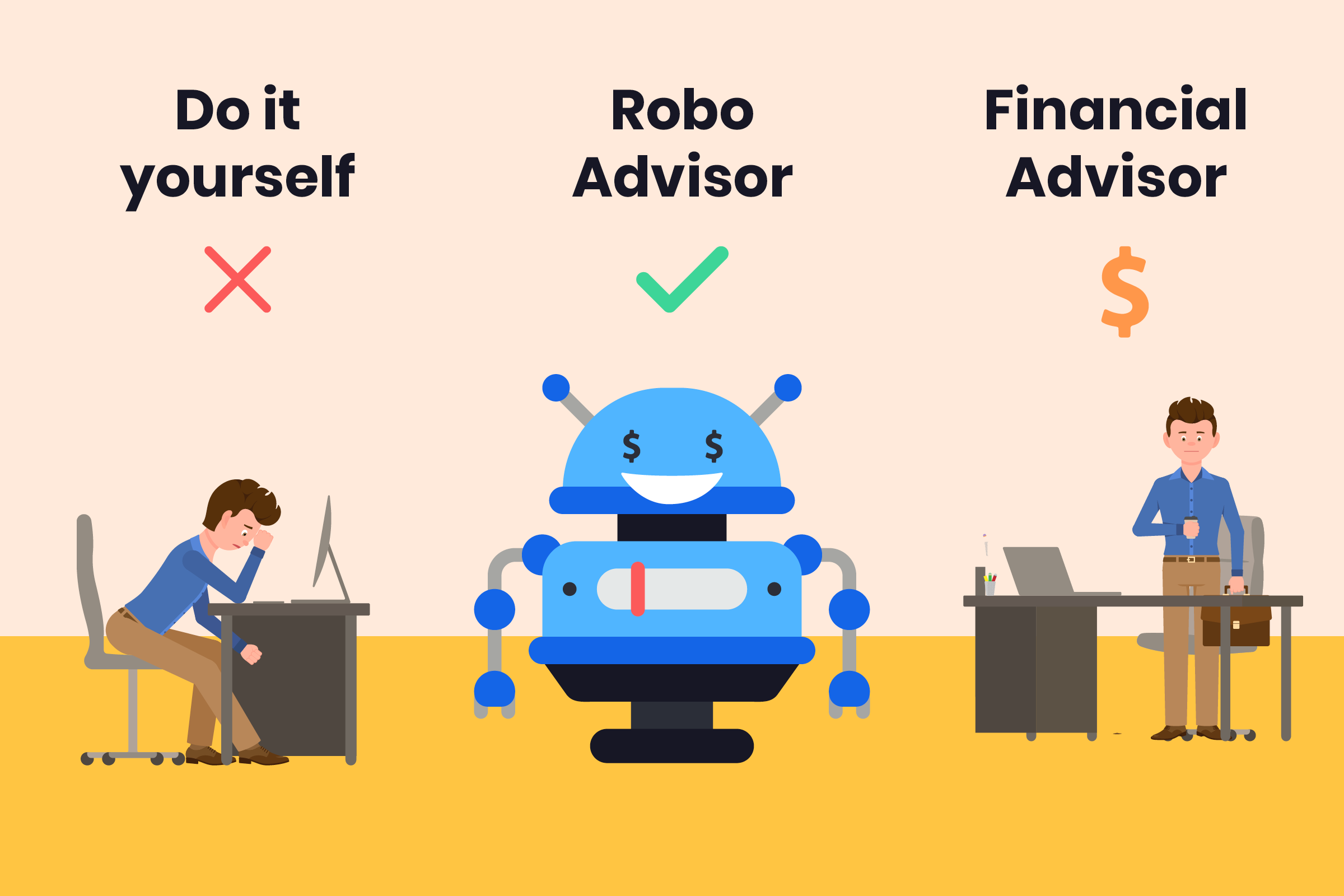
Deciding between a robo-advisor and a human financial advisor? We compare costs, services, and ideal use cases to help you choose the right guidance for your wealth and goals.
As you begin your investment journey or look to optimize your portfolio, a critical question arises: do you need human expertise, or is automated guidance enough? The modern financial landscape offers two primary paths: the tech-driven robo-advisor and the traditional financial advisor. This isn’t a simple question of “good vs. bad,” but rather “what’s right for your specific situation?” This guide breaks down the key differences, costs, and services of each to help you make the perfect match for your financial personality and goals.
The Core Difference: Automated Efficiency vs. Human Holistic Planning
The fundamental distinction lies in the nature of the service:
- A Robo-Advisor is a digital platform that uses algorithms to build, manage, and automatically rebalance a diversified investment portfolio for you. It’s primarily an investment management service—efficient, low-cost, and data-driven.
- A Financial Advisor is a human professional (often a Certified Financial Planner™ or CFP®) who provides comprehensive financial planning. This includes investment management, but extends to tax strategy, estate planning, insurance needs, retirement income planning, and behavioral coaching.
Head-to-Head Comparison: Services, Costs, and Experience
| Feature | Robo-Advisor | Human Financial Advisor |
|---|---|---|
| Primary Service | Automated, low-cost portfolio management & basic goal-setting. | Holistic financial planning & personalized behavioral guidance. |
| Cost Structure | Low annual fee (avg. 0.25%-0.50% of assets). Often no account minimums. | Higher fees (avg. 0.75%-1.25% for assets under management (AUM), or flat/hourly fees). Often has high minimums ($100k+). |
| Personalization | Moderate. Based on a questionnaire (goals, timeline, risk tolerance). Portfolio is a model of ETFs. | High. Deep-dive into your full financial life, emotions, family dynamics, and unique complexities. |
| Human Interaction | Limited to email/chat support. No ongoing personal relationship. | Direct, ongoing relationship with a dedicated advisor for meetings and calls. |
| Best For | “Set-and-forget” investors, beginners, those with straightforward goals, and smaller portfolios. | Complex situations, behavioral coaching, major life transitions, and those needing a holistic financial quarterback. |
| Emphasis | Efficiency, Cost, Discipline | Strategy, Coaching, Complexity |
When to Choose a Robo-Advisor
Robo-advisors are excellent, purpose-built tools for specific investor profiles. Choose one if:
- You’re a Beginner or Have a Smaller Portfolio: You get sophisticated, globally-diversified portfolio management at a very low cost with no high minimums.
- Your Financial Life is Relatively Simple: You have W-2 income, basic retirement accounts, and straightforward goals like “save for retirement” or “build a down payment.”
- You Value “Set-and-Forget” Automation: You want hands-off rebalancing, tax-loss harvesting, and automatic deposits without ever having to make a decision.
- You Are Disciplined and Don’t Need Hand-Holding: You won’t panic and sell during a market crash if you don’t have a human to talk you off the ledge.
Popular Options: Betterment and Wealthfront are leading pure robo-advisors. Many large brokerages like Vanguard, Fidelity, and Charles Schwab also offer hybrid “robo” services with access to human coaches.
When to Choose a Human Financial Advisor
A human advisor provides value that algorithms cannot, especially during complexity or crisis. Choose one if:
- You Have a Complex Financial Picture: This includes business ownership, stock options, rental properties, or intricate tax situations.
- You Are Navigating a Major Life Transition: Planning for retirement distribution, receiving an inheritance, going through a divorce, or selling a business.
- You Need Behavioral Coaching: If you know you’re prone to emotional, impulsive decisions with your money, a trusted advisor can save you from costly mistakes worth far more than their fee.
- You Want Integrated Holistic Planning: You need one person to coordinate your investments, estate plan (wills/trusts), insurance, and tax strategy, ensuring all parts work together.
- You Value a Trusted, Ongoing Relationship: You want a dedicated professional who knows your family and can proactively guide you through life’s stages.
How to Find a Good One: Look for a fiduciary (legally required to act in your best interest) with a CFP® certification. Prefer fee-only advisors (paid directly by you) over commission-based ones.
The Emerging Hybrid Model: The Best of Both Worlds?
Many firms now offer a hybrid approach, which can be an ideal middle ground. You get:
- Automated portfolio management (like a robo) for core investments.
- Access to a dedicated human advisor or CFP® for periodic check-ins, planning questions, and strategy sessions, usually for a fee between a pure robo and a full-service advisor (e.g., 0.30%-0.70%).
This model is perfect for someone who wants a human touchpoint without the high cost of full-scale holistic planning.
How to Make Your Choice: 4 Key Questions
Answer these honestly to guide your decision:
- What is the complexity of my financial life? (Simple W-2 & IRA → Robo | Business, real estate, complex taxes → Human)
- What is my portfolio size? (< $100k → Robo makes sense | > $500k → Human advice may provide more value)
- How do I behave during market stress? (“I stay the course” → Robo | “I get nervous and want to sell” → Human)
- What am I truly paying for? (Just portfolio management → Robo | Financial peace of mind, a coach, and a holistic plan → Human)
Ultimately, the “best” choice is the one that aligns with your needs, portfolio size, and psychological makeup. For many, starting with a robo-advisor is a brilliant, low-cost way to begin building wealth with discipline. As your assets and life complexity grow, transitioning to a human fiduciary advisor for holistic strategy becomes a natural and valuable next step.
The goal isn’t to pick the “winner,” but to select the right tool for the job. Define what you need most—efficient investment management or comprehensive life planning—and choose the guide that gets you there with confidence.





Leave a Reply